Finding your neutral pelvis and spine
Finding your neutral pelvis and spine
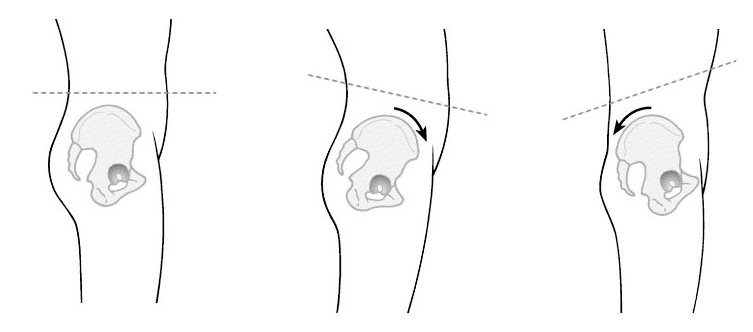
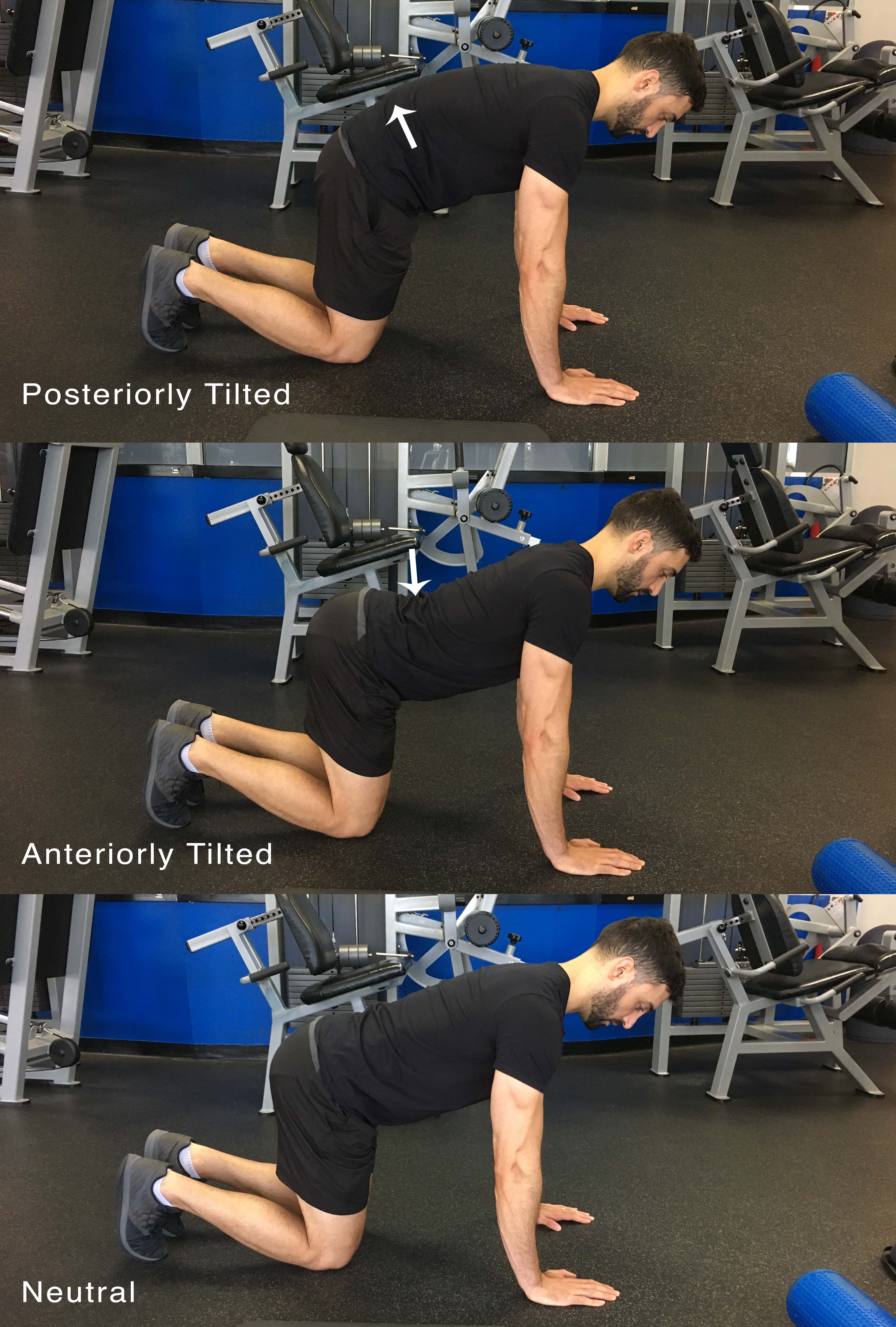
Finding a neutral pelvis and spine position is absolutely critical in performing exercises and even everyday activities safely. A neutral pelvis and spine will generally mean your spine is set in a natural S-curve position (not too curved but not too flat) and the pelvis is set in a neutral position (not too rotated forward or backward). See the pictures below as an example.
When the spine and pelvis is set in neutral, loads are more evenly distributed amongst all the joints and muscles, making it a much more injury resistant posture. For example, if your pelvis is too far rotated forward (anteriorly tilted- see middle picture below), this usually results in an increased curve or arch in your lower back. When exercising in this position, it means increased stress on the joints in lower back and hips, increasing your risk of injury.
Exercises to help you find your neutral pelvis
The Modified Cat-Camel exercise is great for improving your awareness of where your pelvis and spine are in space, and improving your ability to find a neutral pelvis and spine. The Modified Cat-Camel should be performed by doing the following:
Practical implications
You should always find and maintain your neutral position when setting up for any major compound gym exercises (Squatting, Deadlifting, Overhead Pressing, Bent-Over Rowing). Maintaining this position is also important in many sports specific movements such as running and sprinting. Doing so will reduce your risk of injury and potentially even improve performance.
There are many different exercises to help build strength and control in this position for sports and gym specific activity, some of which we will touch on in future articles, so stay tuned!