Lower Body Gym Warm-up | ProSport Physio | Glenelg East

Articles

Injury prevention warm-up: lower body
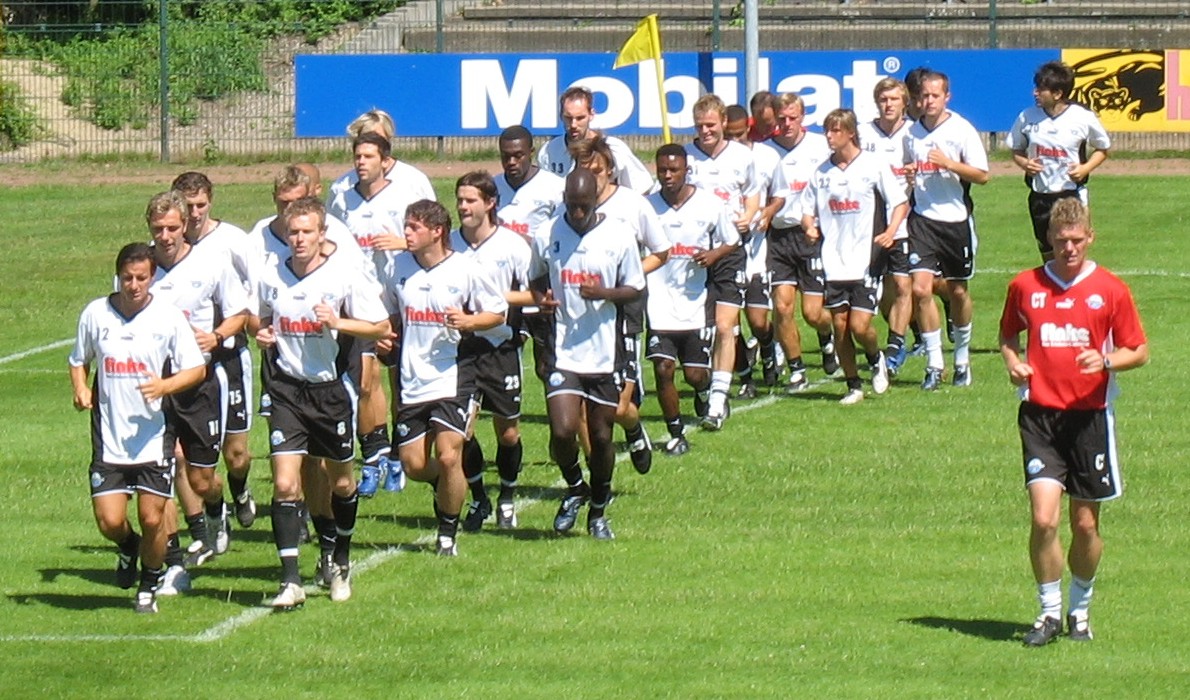
Why warm up your lower body: 3 key points

  • Increase pliability/elasticity of muscles and tendons making them more resilient to injury
  • Improve range of motion of joints allowing better movement patterns, reducing your risk of injury
  • Prepare for specific task/exercise by working on correct movement patterns

  • Structure of a lower body warm-up

  • Fast walk or light jog for 5-10 minutes to elevate core body temperature
  • Flexibility/mobility movements to improve joint range of movement
  • Functional movements to improve task-specific mobility and establish/reinforce correct movement patterns/technique

  • Example warm-up for lower body gym routine

    This series of warm-up exercises can be applied to a lower body gym routine involving typical compound movements including squats, deadlifts, leg press and lunges. It would first start with a 5-10 minute fast walk, and then continue with the following exercises:
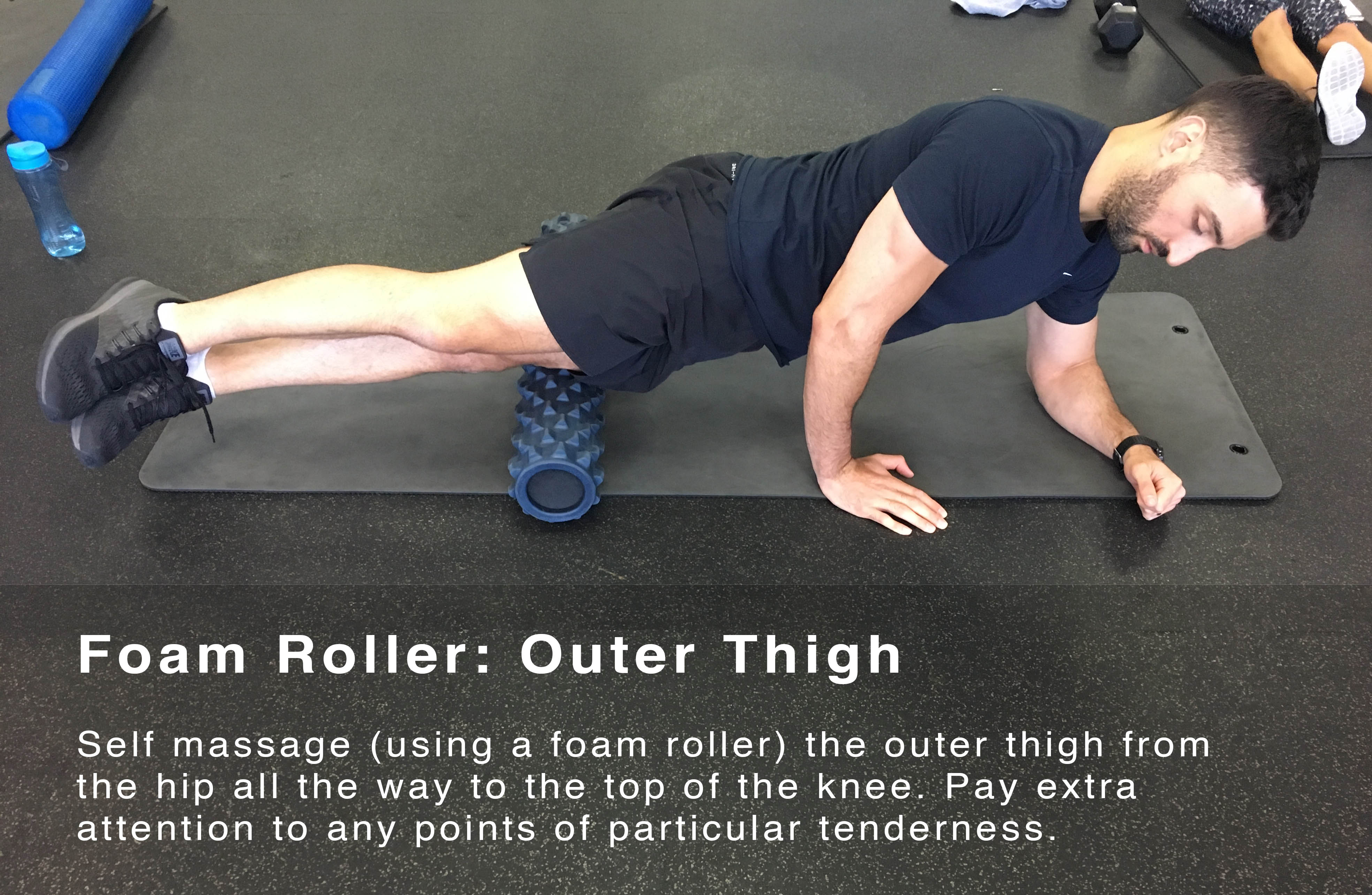
    Foam Roller: Spend 2-5 minutes depending on how tight/sore your quads are

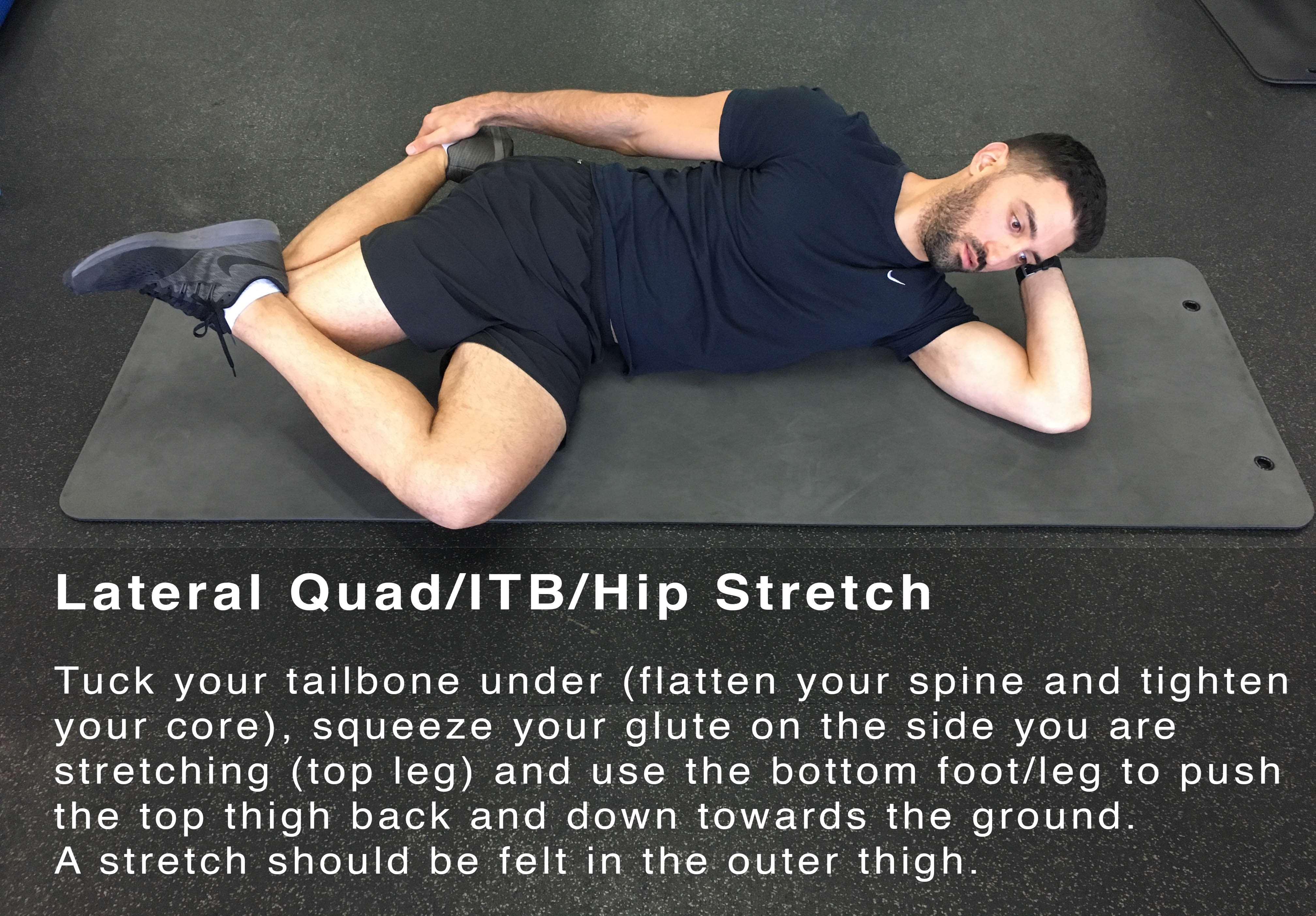
    Outer Quad/Hip Stretch: Hold each side for 2x45 seconds

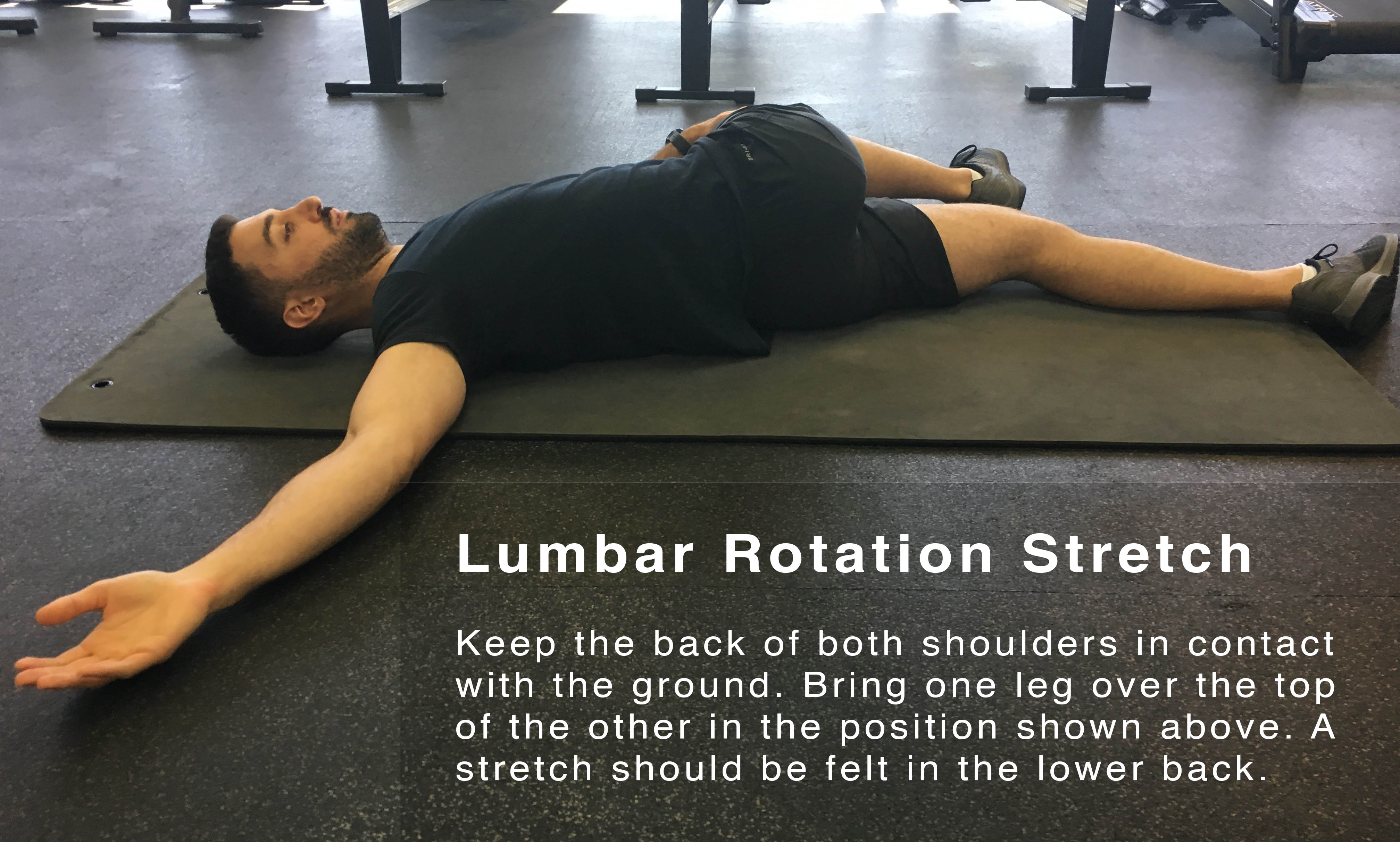
    Low Back Rotation Stretch: Hold each side for 5 seconds, repeat 6 times each side

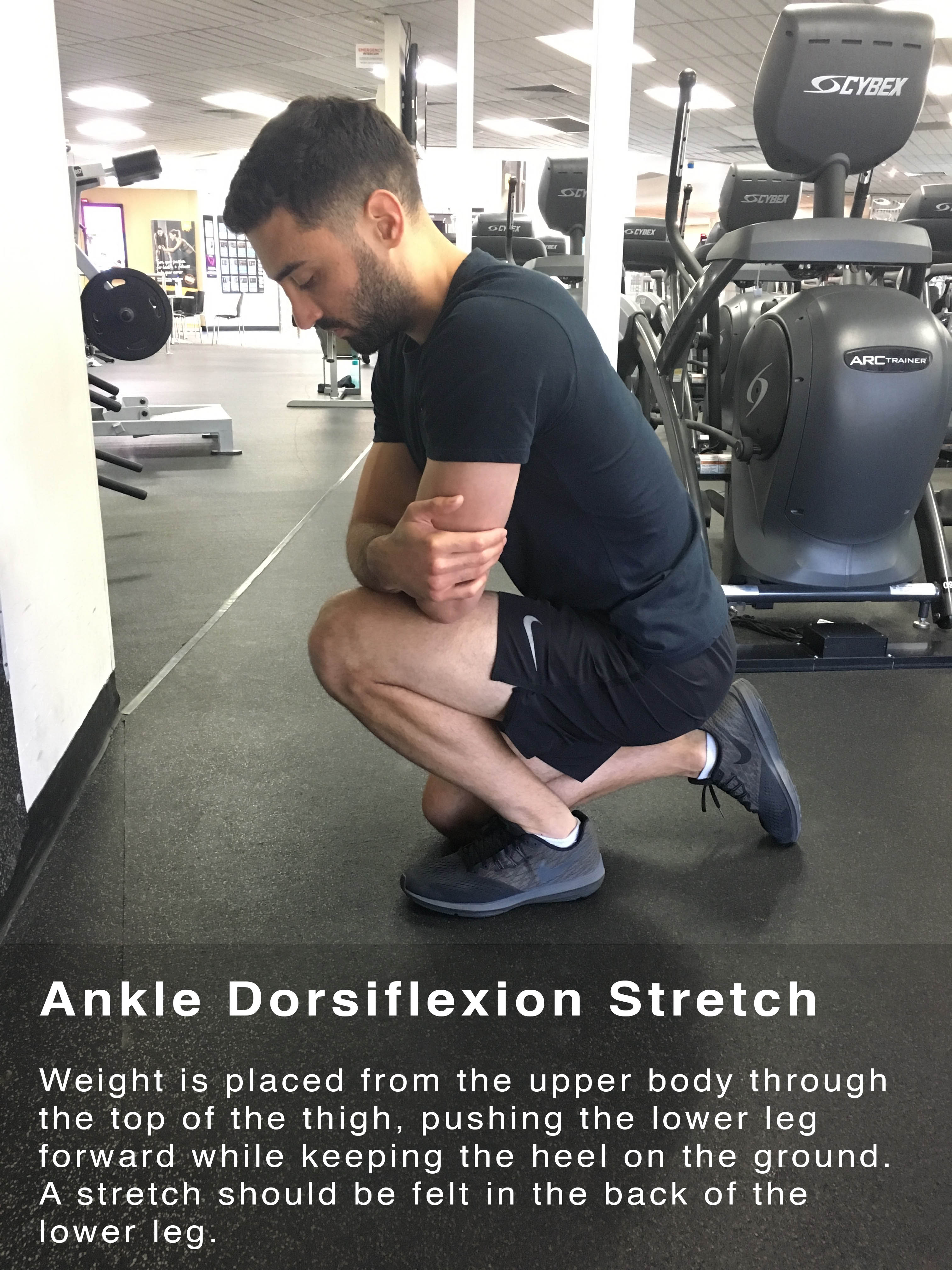
    Ankle Dorsiflexion Stretch: Hold each side for 2x30 seconds

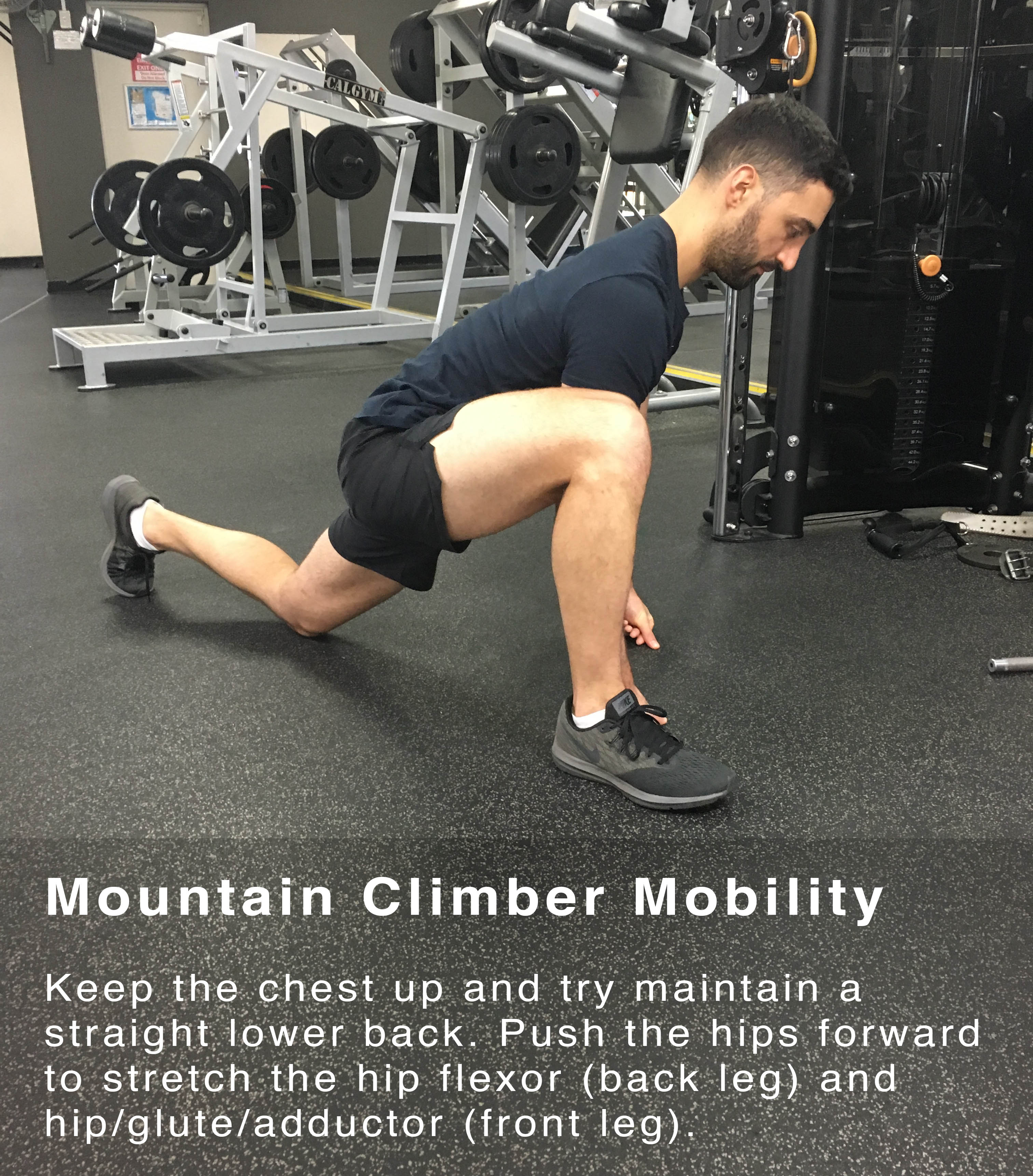
    Mountain Climber: Hold each side for 3 seconds while actively pushing the hips forward to increase the intensity of the stretch. Repeat 10 times each side

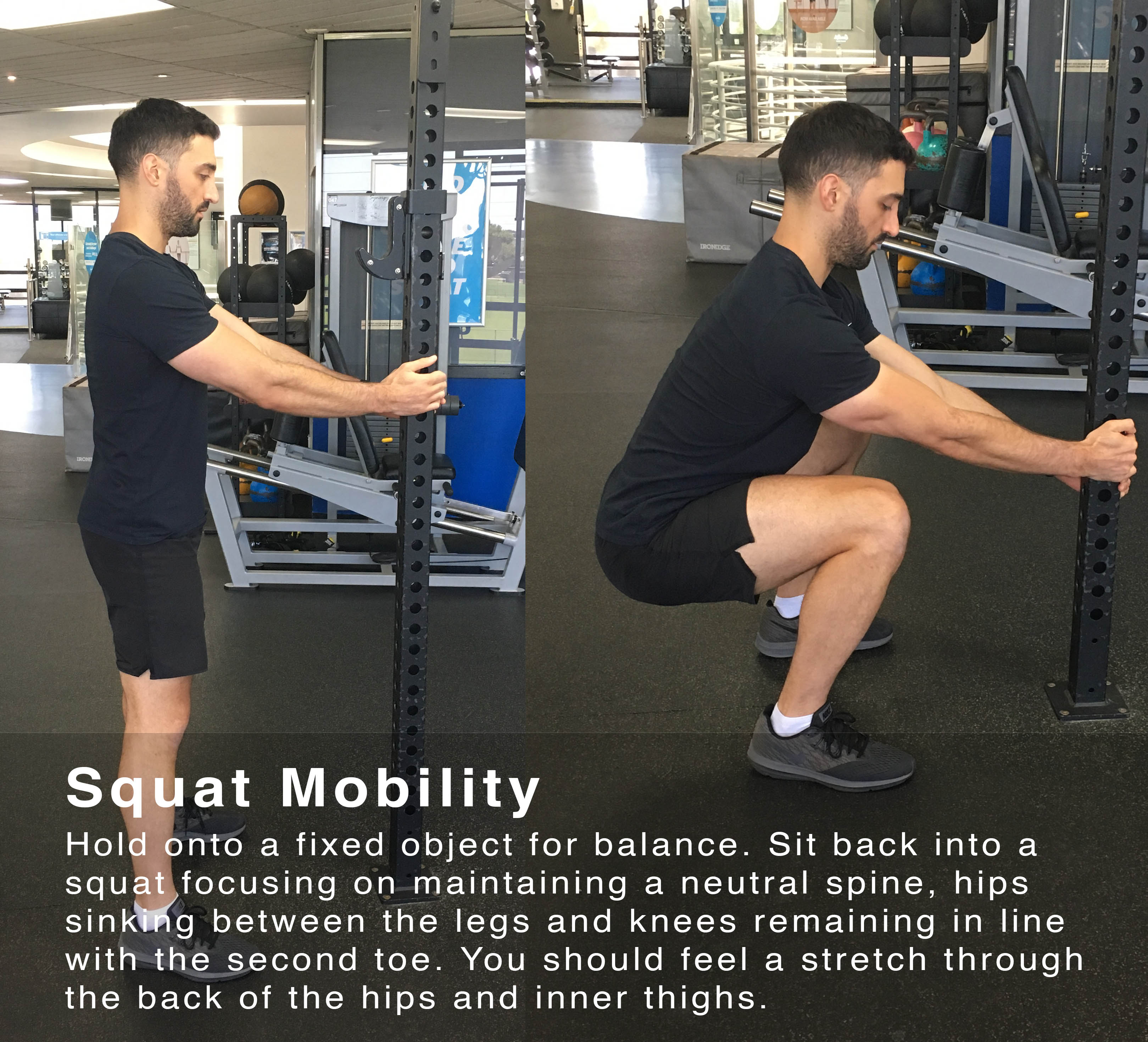
    Squat Mobility: Hold this position for 2x30 seconds

    Following this short series of flexibility/mobility exercises, the warm-up should finish with the first programmed exercise at 50% or less of the planned working weight. For example, if your first exercise is a squat and you plan on doing 3 sets of 8 reps at 80kg, you should warm up by starting with a set of 8-12 at 40kg, before increasing the weight gradually over 2-3 sets until you reach your working weight of 80kg.

    It is also important to note that this warm-up is generic and each individual does have specific needs based on their injury history, which muscles are tight and which joints are stiff!



    Subscribe to our newsletter to stay up to date with special offers, educational material and the latest clinic news!

    Searching Dr Google for answers? Why not email us to request tailored information about your condition and how physiotherapy can help!